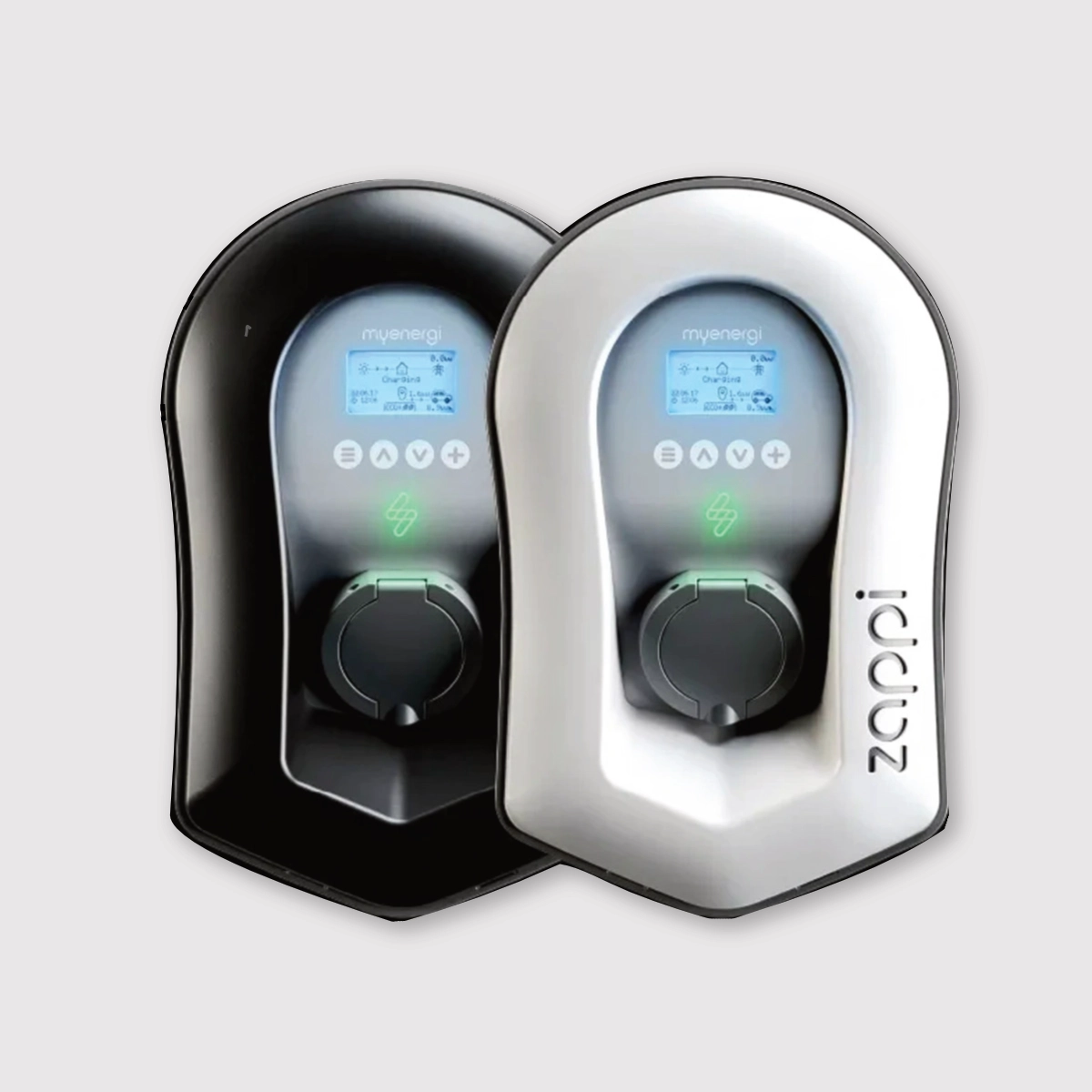

Which EV Charger Should I Get?
There is no single EV charger that is right for every home.
The best choice depends not only on the vehicle and the property’s electrical supply, but also on whether the charger will operate by itself or may eventually become part of a wider solar and battery system.
The key is to choose a charger that suits your needs now without unnecessarily limiting your options later.
An EV charger can work perfectly well on its own
For a homeowner who has no solar panels and no plans to install them, a straightforward grid-connected EV charger may be all that is required.
The charger can still provide useful features such as:
- scheduled charging
- charging status
- app control
- energy-use records
Solar panels and battery storage are not necessary.
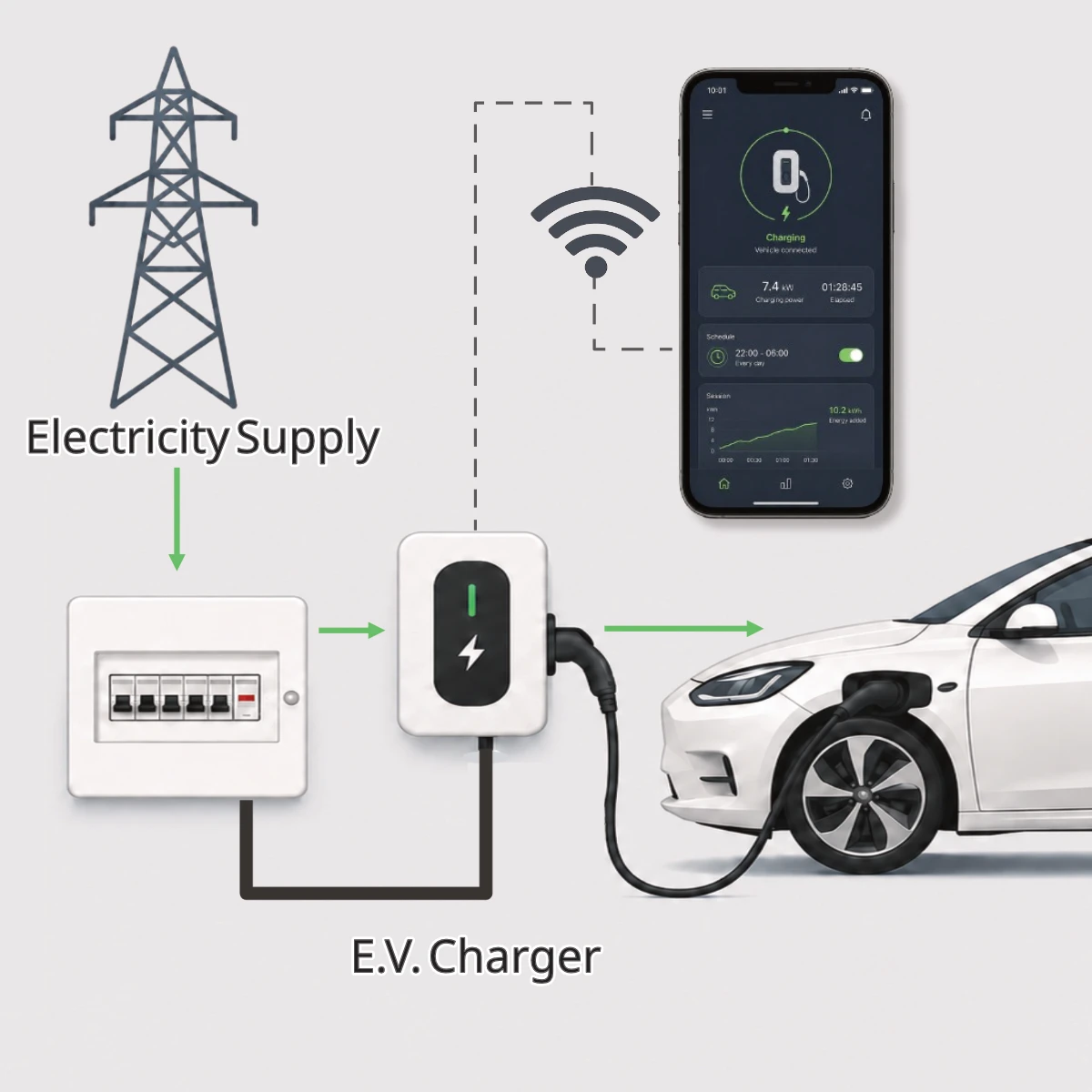
An EV charger can operate without solar panels and can still provide app-based control and charging information.
Consider any future solar or battery plans
A homeowner may not have solar panels now but might consider solar or battery storage later.
In that case, the EV charger should not be chosen entirely in isolation. Discussing the likely future system at the outset can help ensure that the charger, solar inverter, battery and monitoring arrangements can be brought together successfully.
This does not mean that everything has to be installed at once. It simply means that future plans should be taken into account before the first product is selected.
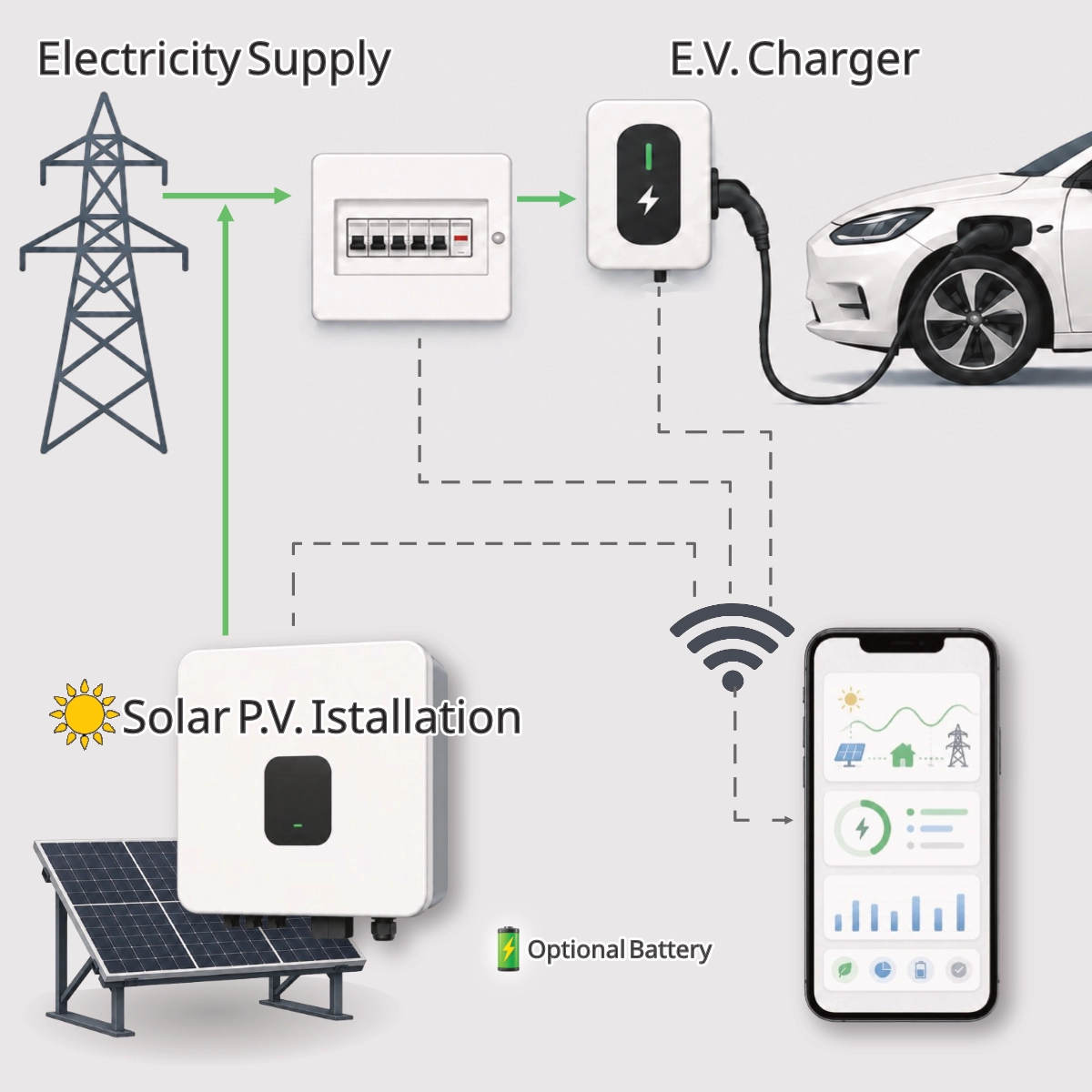
If solar or battery storage may be added later, the EV charger should be chosen with the wider home-energy system in mind.
Plan compatible equipment as one system
Where solar, battery storage and EV charging are all being considered, compatible equipment can make the finished installation easier to coordinate and monitor.
Using products from the same manufacturer can sometimes simplify this, although it is not essential. The important point is to establish before installation that the equipment can communicate effectively and provide the level of monitoring the homeowner expects.
A well-integrated system may make it easier to view:
- solar generation
- grid import and export
- battery charging and discharge
- household electricity use
- EV charging
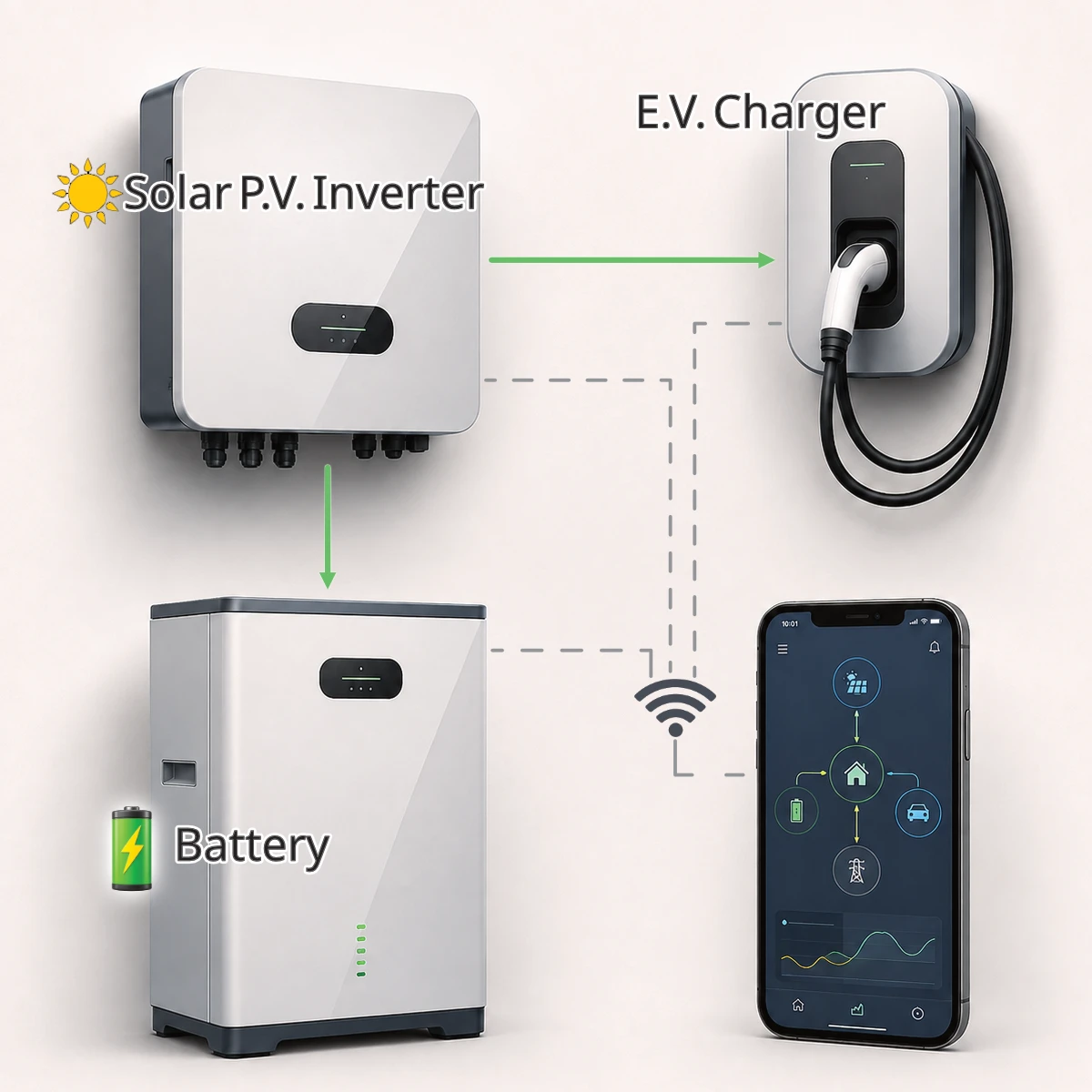
Compatible equipment can make solar generation, battery storage and EV charging easier to coordinate and monitor.
Is a battery necessary?
No. A battery is not required simply to operate an EV charger.
Its value depends on factors such as:
- when the vehicle is normally at home
- when charging usually takes place
- the amount of surplus solar generation available
- household electricity use
- electricity tariffs
- the additional cost of storage
Battery storage should therefore be treated as an option rather than a requirement.
What about the Zappi?
The Myenergi Zappi is a useful example of a charger designed with solar integration in mind and may be worth considering where the homeowner:
- already has solar panels
- may add solar later
- wants the charger to respond to available solar generation
- values clear local controls and monitoring
- wants the EV charger to form part of a wider home-energy system
That does not automatically make it the right charger for every property. It should still be considered alongside the electrical supply, the vehicle, the homeowner’s charging habits and any wider plans for solar or battery storage.