
Should I Buy a Smart Immersion Diverter?
A smart immersion diverter can sound like an obvious addition to a solar installation.
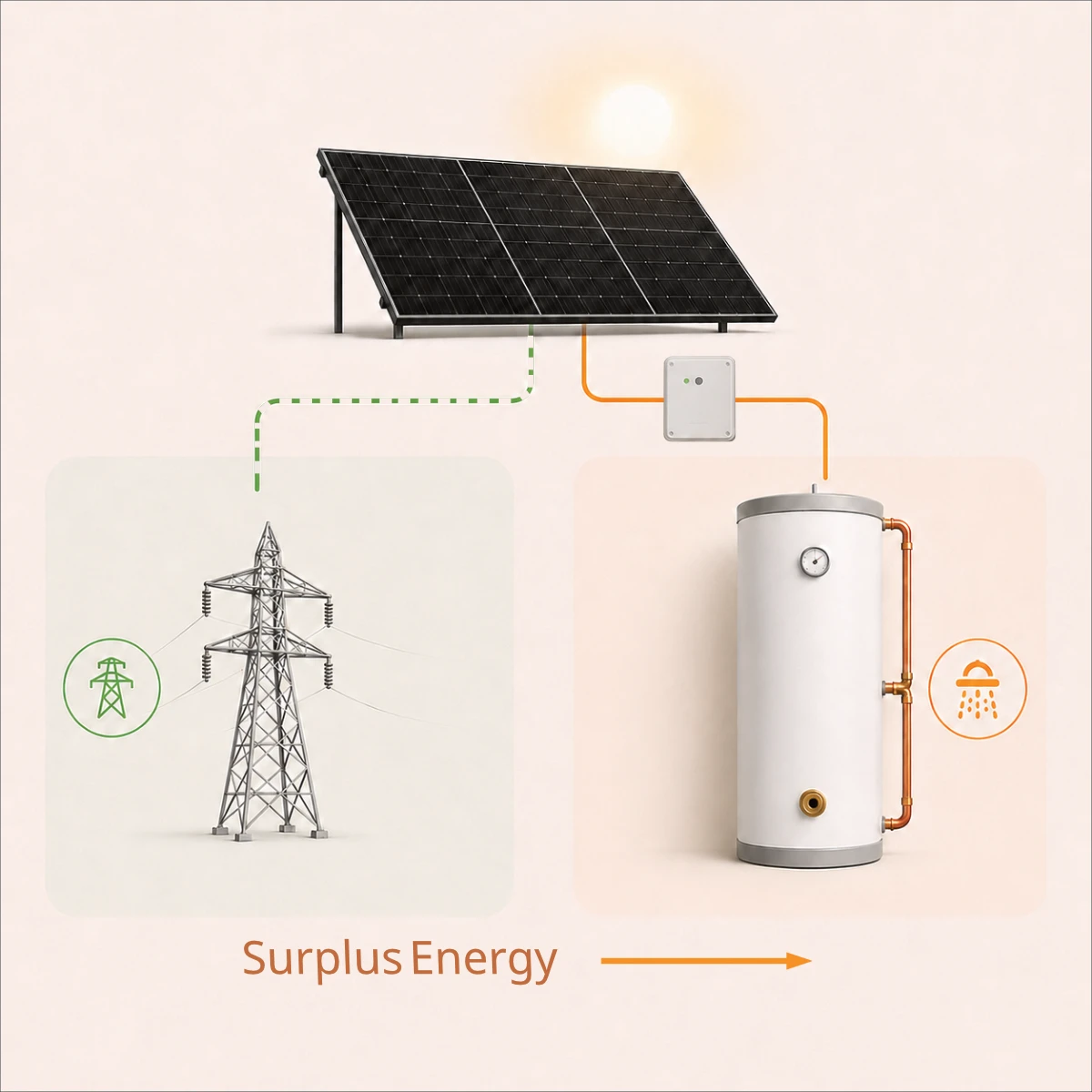
Instead of exporting surplus solar electricity, the diverter sends it to an immersion heater to heat your hot water.
At first glance, that seems like a good way to use more of your own solar. But financially, it may no longer make much sense.
What does an immersion diverter do?
The diverter monitors the electricity being generated by your solar panels.
When it detects surplus electricity that would otherwise be exported to the grid, it sends that energy to the immersion heater instead.
Why were they attractive?
The idea is simple.
Rather than exporting spare solar electricity, you use it to heat water and reduce the amount of gas, oil or other fuel you would otherwise need.
That can sound like a saving.
But exported solar has a value
This is where the calculation changes.
Surplus solar electricity can now have a worthwhile export value. If you divert that electricity into hot water, you are giving up the income you could have received for exporting it.
So the real question is not:
“Can I use more of my own solar?”
It is:
“Is using that electricity to heat water worth more than exporting it?”
For many homes, the answer is no.
What if I heat my water with gas?
For a gas-heated home, the financial benefit of a diverter is often quite small.
Once the cost of buying and installing the equipment is taken into account, the payback can be difficult to justify.
What if I heat my water with oil?
Even oil, often regarded as an expensive heating fuel, can currently cost slightly less per unit of useful heat than the value of exported solar electricity.
So a diverter may still offer little financial advantage.
What about spending the money elsewhere?
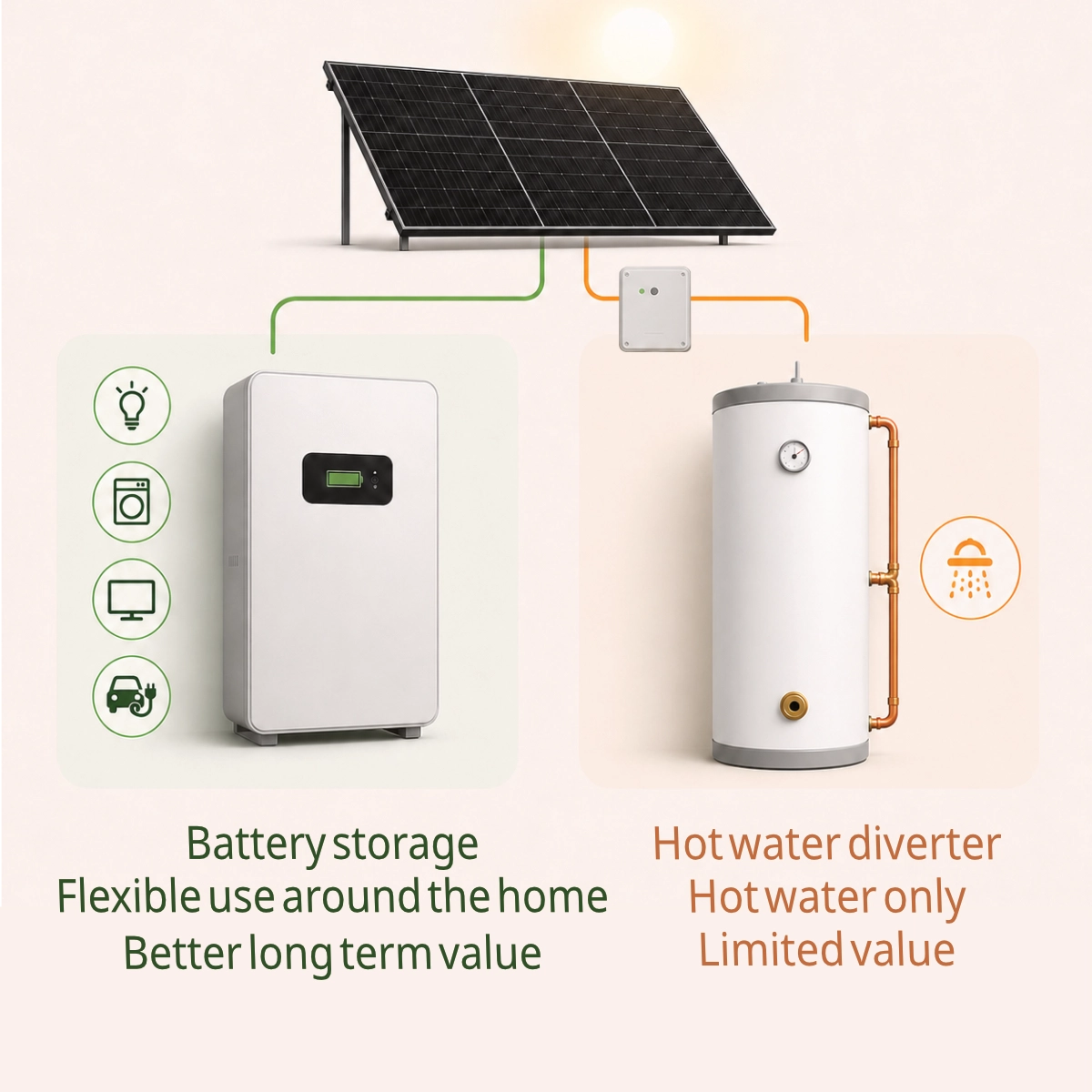
If you are considering additional spending on your solar system, the money may be better directed towards battery storage — or towards increasing the capability of the solar and battery system itself.
This gives you more flexibility than using surplus electricity solely to heat water.