
Is Every Flat Roof Suitable?
Not always.
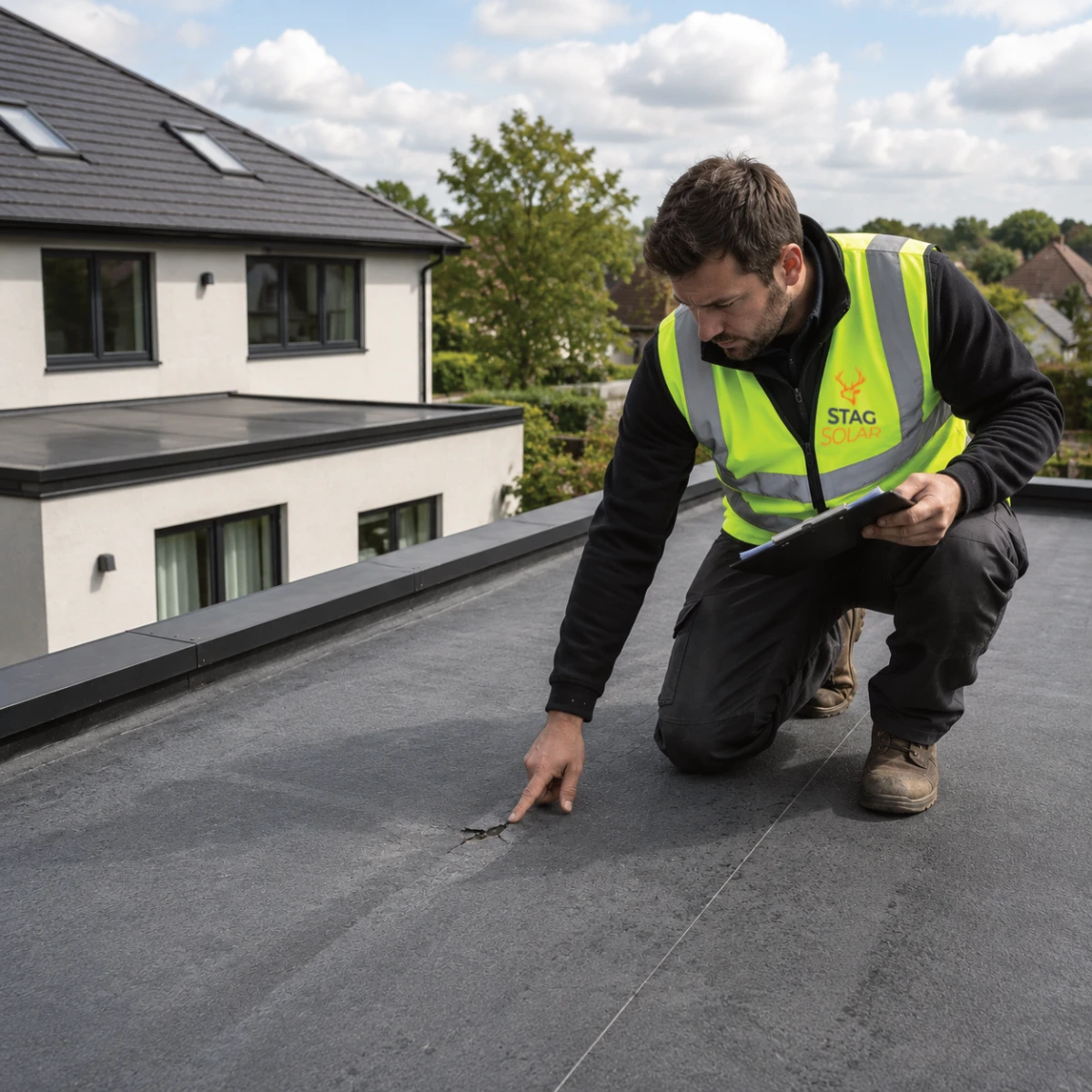
Before any installation begins, Stag Solar carries out a detailed site survey to confirm that the roof is suitable for solar panels.
The survey checks:
- The roof structure is strong enough.
- The waterproof membrane is in good condition.
- There is sufficient unshaded roof space.
- The roof can safely support the additional weight of the mounting system and ballast.
If any repairs are recommended, these can normally be completed before the solar installation starts, helping to protect the roof for many years to come.
How Are Solar Panels Supported?
Unlike pitched roofs, flat roof solar panels are mounted on a specially designed support frame.
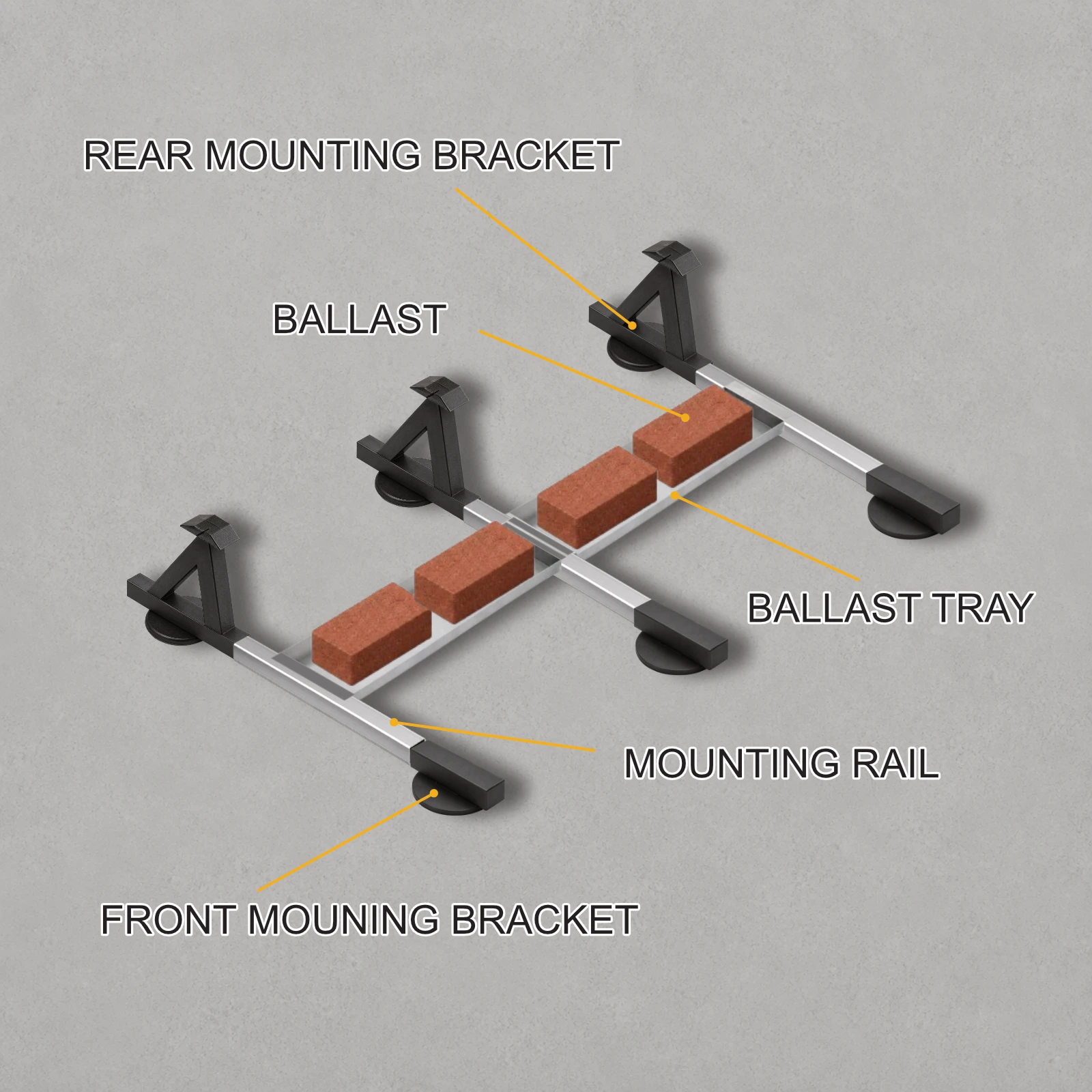
The main components are:
- Front mounting supports
- Rear mounting supports
- Aluminium mounting rails
- Ballast trays
- Concrete ballast blocks
Rather than drilling into the roof, the ballast provides the weight needed to keep the system securely in place while the supports position each panel at the correct angle.
How Does the Mounting System Work?
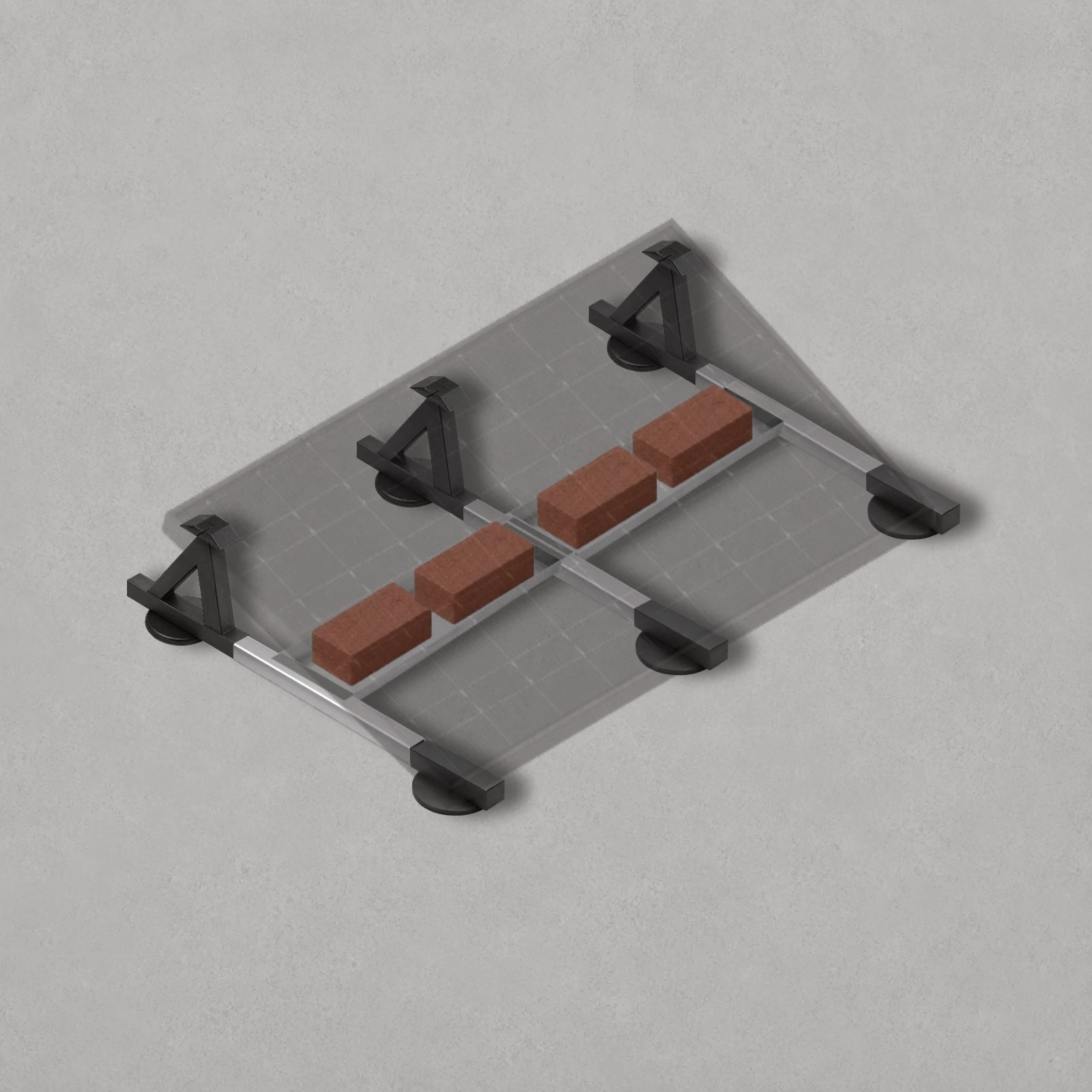
The mounting frame supports the solar panel while the ballast tray sits beneath the raised edge of the panel.
Concrete ballast blocks are placed inside the tray to provide stability and resistance to wind loading.
The transparent illustration below shows how the panel sits above the support frame while allowing all of the mounting components to remain visible.
This simple arrangement creates a strong, low-profile installation without penetrating the waterproof roof covering.
What Does the Finished Installation Look Like?
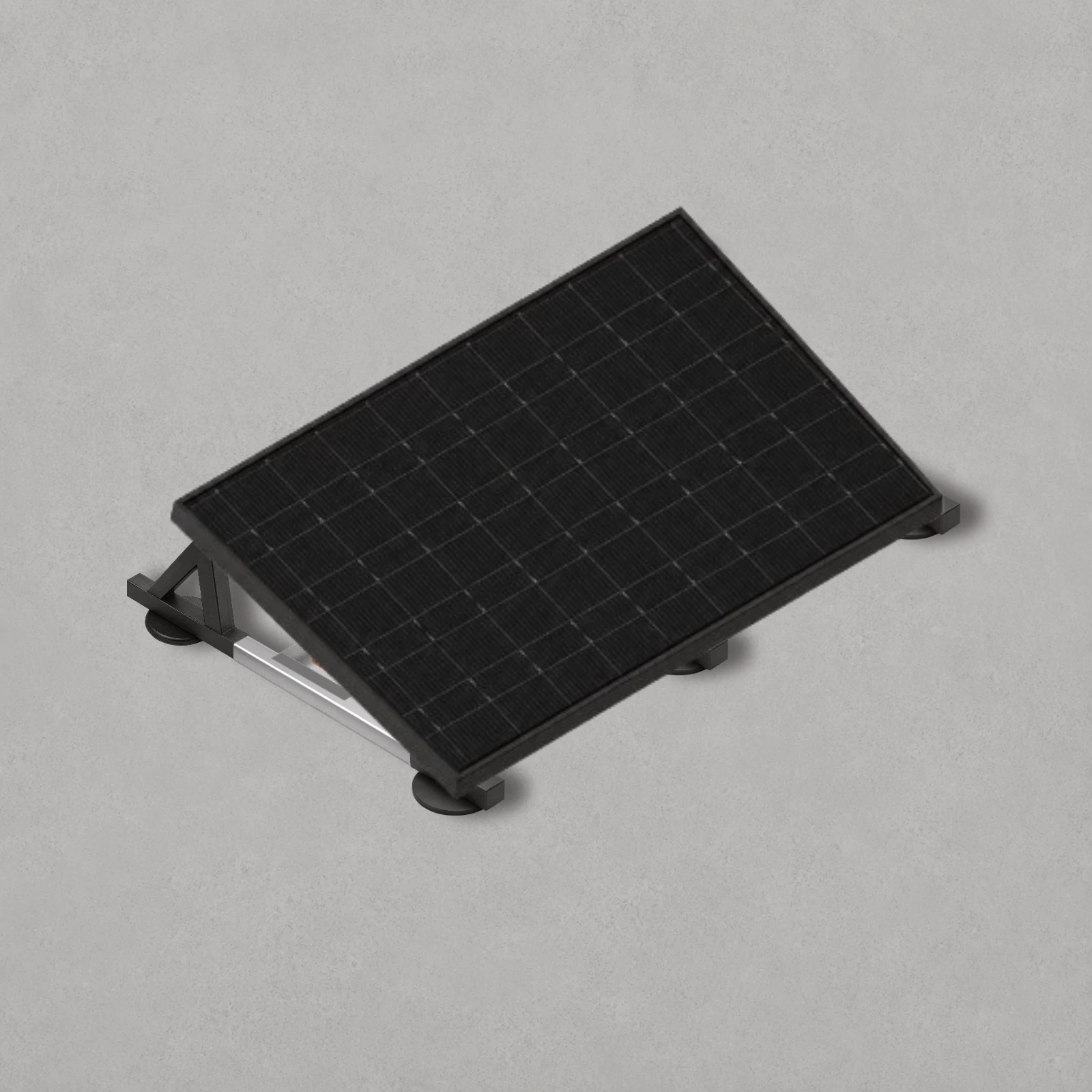
Once installed, the solar panel completely covers the mounting system, leaving only a neat, low-profile array visible on the roof.
The shallow angle allows rainwater to drain freely while helping to optimise solar generation throughout the year.
Modern mounting systems are engineered to provide excellent durability with very little maintenance, making them an ideal solution for domestic flat roofs.
A Professional Finish That Complements Your Home
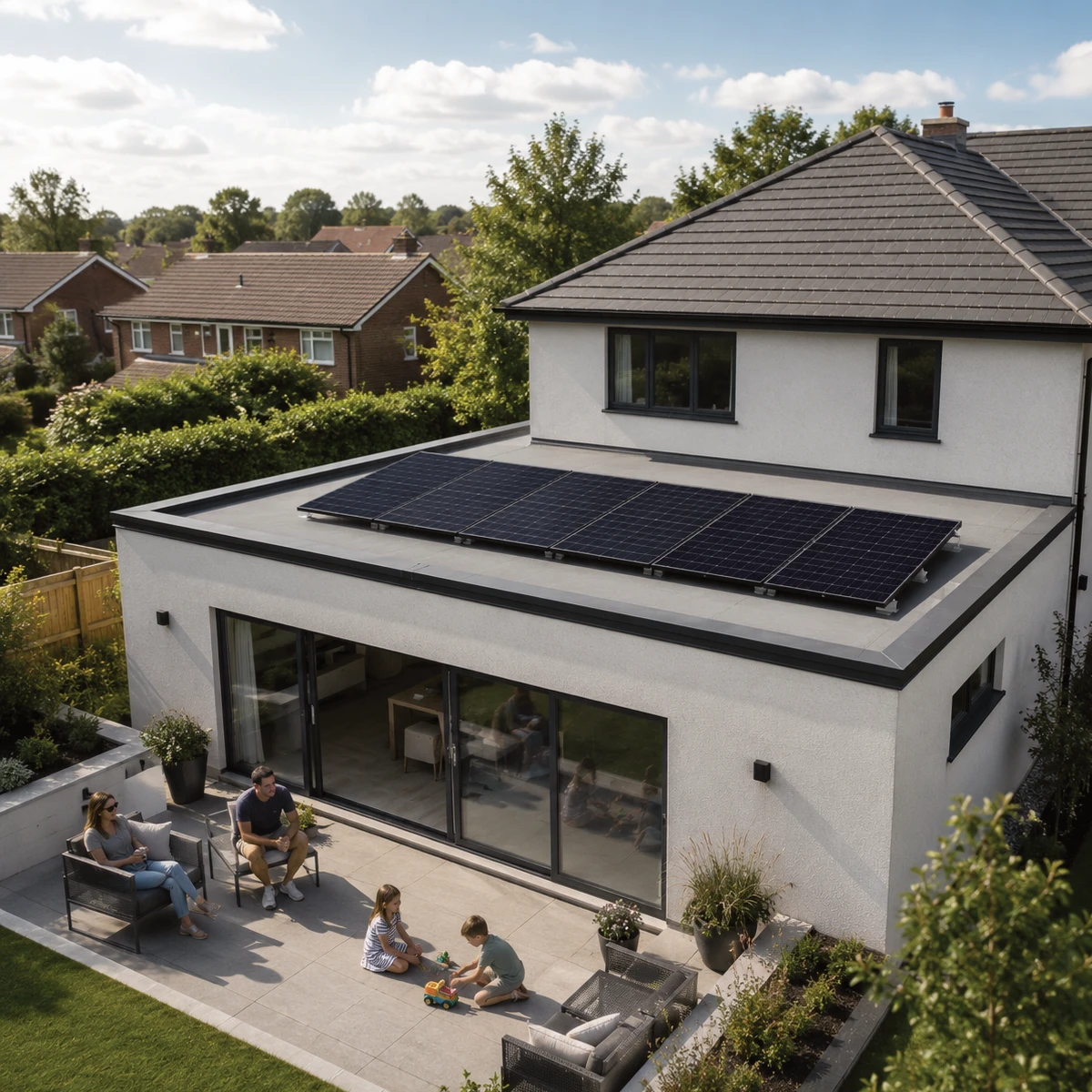
When professionally designed and installed, a flat roof solar system becomes an attractive feature rather than an intrusion.
The low-profile panels blend naturally with the building while quietly generating renewable electricity year after year.
Every installation is individually designed to suit the property, ensuring the best balance between appearance, performance and long-term reliability.
If you’re considering solar panels for a flat roof extension, garage or other flat roof area, the Stag Solar team will be happy to assess your property and recommend the most suitable solution.
See our Which? Trusted Trader reviews.